
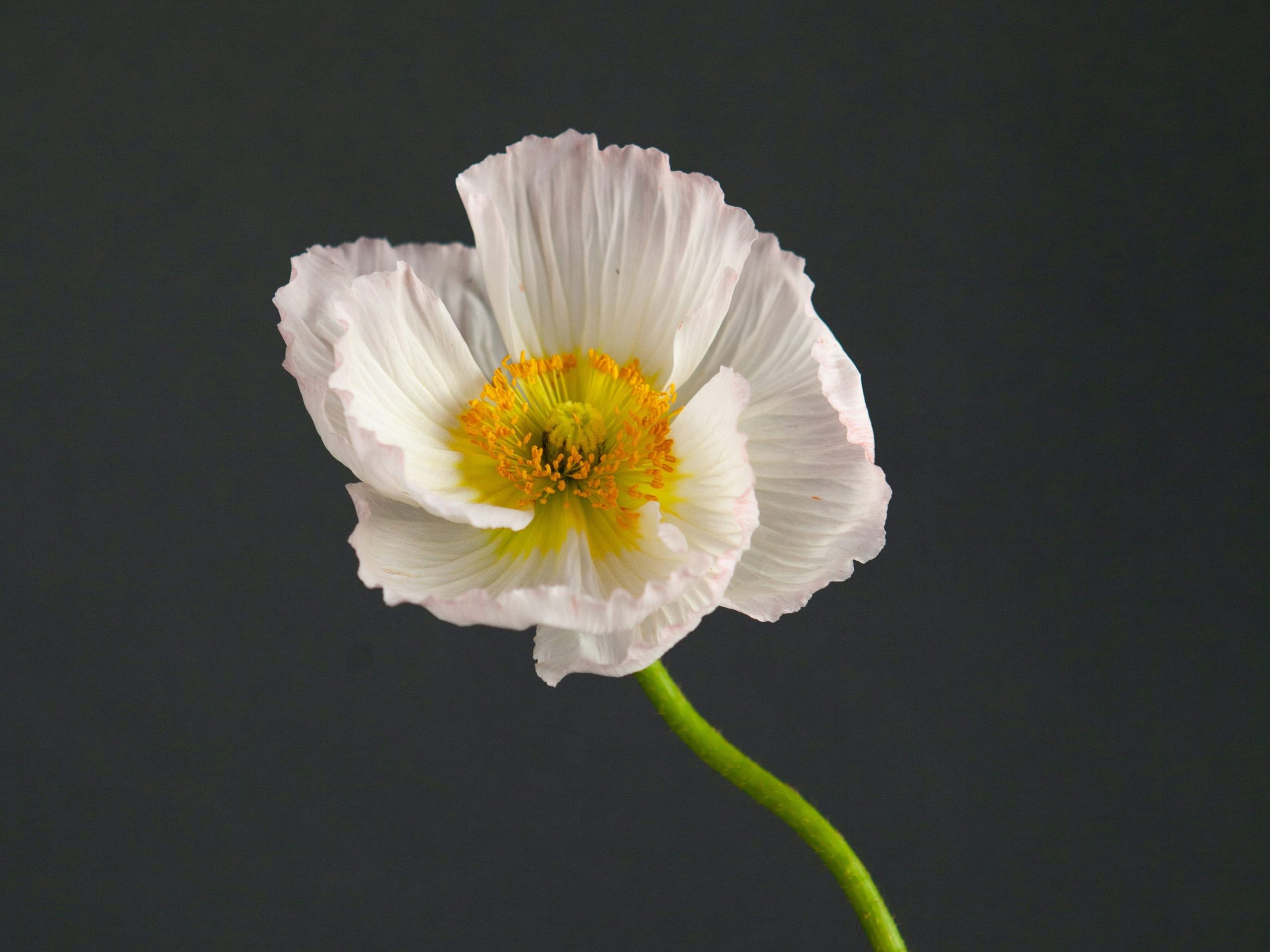
Every November, poppies invite us to pause and remember the human cost of war. At Brighton Peace and Environment Centre, our annual Peace Poppy Appeal asks us to carry that remembrance across borders, recognising the suffering of people of every nationality and renewing our commitment to peace.
The white poppy, also known as the peace poppy, has been a symbol of remembrance for more than 90 years. It remembers all victims of war, both civilians and members of the armed forces, and connects that remembrance with a commitment to preventing future conflict. Its message includes those killed, injured, displaced or left living with trauma, and the families and communities whose lives are changed by war.
For BPEC, this reflects something fundamental: every person’s life matters, wherever they were born and whichever side of a border they lived on.
White poppies were first produced in 1933 by the Co-operative Women’s Guild. Many of its members had lost loved ones in the First World War. Concerned about the growing military emphasis of remembrance, they wanted to keep the promise of “never again” at its heart. The white poppy grew out of grief and a determination to prevent others from experiencing the same loss.
The red poppy had been adopted by the British Legion in 1921, following campaigning by French fundraiser Anna Guérin. In the period after the Great War (WWI) its appeal raised money to help veterans with needs including housing and employment. Today, the Royal British Legion supports serving personnel, veterans and their families.
It would be inaccurate to say that the red poppy remembers only British soldiers. The Legion’s remembrance includes British and Commonwealth Armed Forces and acknowledges civilian lives lost through conflict and terrorism. It also describes the red poppy as a symbol of hope for a peaceful future. The white poppy’s distinctive emphasis is its explicit remembrance of all nationalities, alongside a challenge to militarism and an active commitment to peaceful alternatives to war.
So why does the white poppy attract controversy?
Some critics see it as a criticism of the armed forces, an intrusion into a shared moment of mourning, or an attempt to turn remembrance into an anti-war campaign. White poppy supporters have faced accusations of disrespecting military sacrifice and “hijacking” remembrance. For those supporters, however, remembering service personnel is embedded in why we question the decisions that send people to war.
Some critics are cooncerned that white poppies divert donations from veterans. But choosing a white poppy does not prevent anyone from supporting veterans’ charities. The women who introduced it were themselves explicit that they did not want to undermine assistance for disabled former soldiers.
The Legion’s own position is more accommodating than some of the public debate suggests: its guidance allows white poppy wreaths alongside red ones and respects people’s freedom to choose how they remember.
Behind these disagreements lies a worthwhile question: what should remembrance ask of us?
For many people, a red poppy expresses personal grief, gratitude or a connection to someone they loved. We should respect that sincerity. Equally, we should be able to examine the role of military institutions in remembrance and ask whose experiences receive attention.
Ceremonies that honour courage and sacrifice can also make space for difficult questions about why wars happen, how they might be prevented, and what responsibility governments have towards those left living with their consequences. Supporting people harmed by war and challenging the decisions that cause that harm can go hand in hand.
At BPEC, we believe remembrance should encourage this reflection. We want to acknowledge people whose suffering can feel distant or unfamiliar, and to make room for civilian experiences alongside military ones. A family grieving overseas deserves the same compassion as a family grieving here.
That is why we return to the peace poppy each year. It expresses our commitment to global peace, education and community, and reminds us that remembering the past carries a responsibility towards the present.
Building peace takes practical work: learning to resolve conflict, challenging dehumanising language, listening across differences and supporting communities affected by violence. These are things we can contribute to together.
BPEC will once again be selling white poppies through our annual Peace Poppy Appeal. We invite you to wear one as an expression of remembrance for all victims of war, and of your commitment to a future in which fewer people have to mourn.
Bibliography
BBC News (2018) ‘White poppy: How is it different from the red remembrance symbol?’, 24 October. Available at: https://www.bbc.co.uk/news/uk-
Imperial War Museums (2021) The Poppy | The history of Remembrance Day poppies. Available at: https://www.youtube.com/watch?
Mah, B. (2006) ‘Nip white poppies in the bud, legion says: Antiwar symbol “illegal, disturbing”: [Final Edition]’, Edmonton Journal, 8 November, p. A1 FRONT.
McCrae, J. (2018) In Flanders Fields, The Poetry Foundation. Available at: https://www.poetryfoundation.
McKAY, G. (no date) ‘Cultures of peace: the white poppy’. Available at: https://georgemckay.org/
Mitchell, A. (2026) ‘The companies making billions from the Iran war’, BBC News, 8 May. Available at: https://www.bbc.co.uk/news/
Poppy Appeal 2026 – Key Dates, Purpose & FAQs | Royal British Legion (2019) The Royal British Legion. Available at: https://www.britishlegion.org.
‘Red and White Poppies’ (no date) Cymru Global. Available at: https://cymru.global/our-work/
The White Poppy (2022) Peace Pledge Union. Available at: https://www.ppu.org.uk/
White Poppies – Frequently Asked Questions (2018) Peace Pledge Union. Available at: https://www.ppu.org.uk/
Why we wear poppies for Remembrance (no date) Imperial War Museums. Available at: https://www.iwm.org.uk/